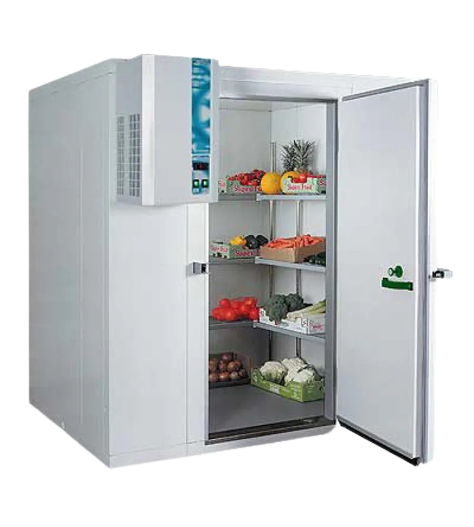


Quick answer: Custom refrigerated warehouses are purpose-built, multi-temperature cold storage facilities engineered for high-volume logistics, export, and 3PL operations — distinct from a single-zone modular cold room warehouse. In Dubai, demand for custom refrigerated warehouses is accelerating as the emirate’s export infrastructure expands. The Dubai Chambers–FedEx memorandum of understanding, signed July 6, 2026, is expected to increase the volume of goods moving through free zones such as Jebel Ali (JAFZA), Dubai South, and Dubai Airport Free Zone (DAFZA) — all of which depend on temperature-controlled warehousing to keep perishable and pharmaceutical cargo compliant in transit.
Why Demand for Custom Refrigerated Warehouses Is Rising in Dubai
The Dubai Chambers–FedEx MoU and What It Means for Cold Chain Capacity
On July 6, 2026, Dubai Chambers signed a memorandum of understanding with FedEx Express to help Dubai-based businesses strengthen export readiness and expand into international markets. Under the deal, Dubai Chambers members get plugged into FedEx’s global transport network, along with faster onboarding, negotiated logistics terms, and dedicated help navigating customs paperwork. It also includes support for ATA Carnet, a customs document that allows goods such as trade samples and exhibition materials to move across borders temporarily without duty.
For the cold chain sector, this partnership has a direct operational effect: as export volumes rise, food manufacturers and biotech firms need larger buffer storage and pre-export cold holding capacity at their origin facilities. It also lowers the barrier for smaller exporters — boutique food processors, organic farms, and specialized biotech firms — to enter international markets, which increases demand for scalable, modular cold storage warehouses rather than only large fixed-capacity builds.
Dubai’s D33 Agenda and UAE Cold Chain Market Growth
The MoU ties directly into a much bigger target. Dubai’s D33 plan isn’t modest: double the size of the economy by 2033, and land among the world’s top three economic cities. Backing an ambition like that takes serious cold chain capacity. Mordor Intelligence has the UAE’s cold chain logistics market at around USD 1.65 billion in 2025, growing to USD 2.43 billion by 2031 — roughly 5.84% annual growth. Other research firms land on different numbers depending on how they define and measure the market, so treat this as a solid estimate, not the final word.
Within that market, warehousing does the heavy lifting on revenue, not transport — it accounts for just over half of total market value, per the same report. An estimated 83% of palletized cold storage capacity in the UAE is already outsourced to third-party logistics (3PL) providers rather than operated in-house, which is one reason purpose-built, leasable custom refrigerated warehouses are in such high demand near export corridors.
Custom Refrigerated Warehouses vs. Standard Cold Room Warehouse: What’s the Difference
A standard cold room warehouse is usually a modular, prefabricated enclosure installed inside an existing building — a restaurant, supermarket, or small processing kitchen. It typically operates as a single temperature zone (chiller or freezer) and serves localized, low-volume storage accessed on foot. A freezer room is a sub-zero variant of this, generally requiring 120–150mm wall insulation and specialized flooring to stop the ground beneath it from freezing.
A custom refrigerated warehouse is a different category entirely: a ground-up, purpose-built structure designed for high-throughput supply chain operations. These facilities feature internal clearances of 14–17 meters to support automated high-bay racking, multiple integrated temperature zones under one roof, enclosed refrigerated staging docks, and material handling equipment integration.
| Feature | Cold Room Warehouse | Custom Refrigerated Warehouse |
|---|---|---|
| Construction | Prefabricated panel enclosure, often retrofitted into an existing building | Ground-up structure engineered around throughput and compliance needs |
| Temperature zones | Typically one (chiller or freezer) | Multiple integrated zones in a single facility |
| Typical use | Restaurants, supermarkets, small processors | 3PL, export, pharma, e-commerce fulfillment |
| Clearance height | Standard ceiling height | 14–17m for high-bay racking |
| Loading | Manual, walk-in access | Refrigerated docks, cross-docking, automated levelers |
Operators typically move from a cold room to a custom-built warehouse when they need cross-docking capability, automated storage and retrieval, dedicated pharmaceutical infrastructure such as airlocks and quarantine zones, or when daily pallet volume exceeds what a modular enclosure can support ergonomically.
Core Design Features of Custom Refrigerated Warehouses
Multi-Temperature Zoning: From Chilled Storage Warehouse to Deep-Freeze
Most 3PL and export-focused facilities operate several temperature zones under one roof to serve a diverse client base efficiently.
| Zone | Range | Typical Use |
|---|---|---|
| Ambient / controlled room | +15°C to +25°C | Canned goods, dry foods, oral solid pharmaceuticals, premium chocolate |
| Cool storage | +8°C to +15°C | Tropical fruit, root vegetables, sensitive cosmetics |
| Chilled storage warehouse | 0°C to +8°C | Dairy, fresh meat/poultry, leafy greens, standard vaccines |
| Frozen storage / freezer warehouse | −18°C to −25°C | Frozen meat, seafood, ice cream, ready-meals |
| Ultra-low / deep freeze | −30°C to −80°C | Premium ice cream export, biologicals, mRNA therapies |
| Blast freezing | −35°C to −40°C | Rapid freezing to preserve cellular structure in cooked/fresh foods |
Note: blast freezing is a temporary rapid-freeze process, not a static storage zone — product passes through a blast cell before moving into long-term frozen or ultra-low storage.
Loading Docks, Racking & Throughput Engineering
Dock areas are the weakest point in any cold chain envelope — every time a trailer door opens to Dubai’s ambient heat, thermal infiltration follows. Well-designed facilities use enclosed, refrigerated staging ante-rooms held around +2°C to +8°C, along with inflatable dock shelters, heavy-duty seals, and high-speed insulated roll-up doors to keep hot desert air out during loading. Inside, racking strategy — selective racking, very narrow aisle (VNA) systems, double-deep, or automated mobile racking — determines how efficiently cubic volume is used and how much energy the refrigeration system needs to cool empty aisle space.
Insulation, Vapor Barriers & Flooring for the UAE Climate
Because summer ambient temperatures in Dubai routinely exceed 45°C, insulation thickness has to be sized well beyond what’s standard in temperate climates. As a general industry guideline, panels typically run roughly 30–50mm for ambient partitions, 80–100mm for chillers, 120–150mm for standard freezer zones, and up to 170–200mm for blast freezers — though exact figures should be confirmed through project-specific thermal load calculations rather than treated as fixed specifications. Vapor barrier placement matters just as much as thickness. In the UAE’s climate, it has to go on the exterior side of the insulation — the warm side. Get that backwards, and humid air works its way into the panel core. Once it’s trapped, it condenses and freezes, and the panel’s structural integrity breaks down from there. It’s one of the more common and preventable mistakes on cold storage builds here.
Flooring in deep-freeze zones needs similar care. At −25°C, the ground beneath a concrete slab gradually freezes and expands — engineers call this frost heave, and it’s enough to crack the slab and undermine the whole foundation. The fix is extruded polystyrene (XPS) floor insulation, usually paired with underfloor electric heating cables or glycol heating pipes, to keep the sub-soil from ever reaching the freezing point.
Refrigeration Systems: Ammonia, CO₂ and Glycol
Ammonia (NH₃/R717) is still the default choice for large industrial cold storage, and for good reason: it’s thermodynamically efficient, with zero ozone-depletion or global-warming potential. The catch is toxicity, which means the facility needs serious safety infrastructure built around it. That’s pushing more sites toward low-charge systems and NH₃ recovery heat exchangers, which cut down how much refrigerant sits on-site at any given time. CO₂ is catching up fast: transcritical CO₂ (R744) systems are a natural, non-toxic option, and booster and gas-ejector technology means they can stay efficient even when it’s brutally hot outside. Many large facilities use cascade systems — ammonia on the outdoor side, CO₂ on the indoor side — to keep toxic refrigerant outside the occupied warehouse. Glycol secondary loop systems offer a further layer of safety by containing the primary refrigerant entirely within the plant room.
Freezer Warehouse Compliance and Food Safety Standards in Dubai
HACCP & Dubai Municipality Food Code
Food safety here comes down to Federal Law No. 10 of 2015, enforced on the ground by Dubai Municipality through its own Food Code. If you’re handling food, a HACCP program — Hazard Analysis and Critical Control Points — isn’t optional, and most operators go a step further and get ISO 22000 certified too.
Cold rooms get extra scrutiny under HACCP. They’re classified as critical control points, which in practice means constant temperature validation, panel finishes that can actually be kept hygienic, and raw ingredients kept physically separate from anything ready to eat.
GDP Compliance for Pharmaceutical Cold Storage
Pharmaceutical facility licensing in the UAE, including cold storage warehouses, is now overseen federally by the Emirates Drug Establishment (EDE), which assumed these functions from the Ministry of Health and Prevention (MOHAP) in late 2025; the Department of Health (DOH) continues to regulate separately for facilities in Abu Dhabi. Facilities must adhere to Good Distribution Practice (GDP) and WHO guidance. Before certification, they must complete temperature validation and mapping — including separate summer and winter profile studies — to prove uniform temperature control across every rack position. Ongoing compliance requires calibrated, auditable data logging — commonly built to internationally recognized standards such as 21 CFR Part 11 for electronic record integrity — and a documented Corrective and Preventive Action (CAPA) process for any temperature excursion.
Best Locations for Custom Refrigerated Warehouses Near Dubai’s Export Hubs
| Location | Best For | Key Advantage |
|---|---|---|
| Jebel Ali Free Zone (JAFZA) | Maritime cold chain, bonded re-export | DP World-operated port handling over 15 million TEU annually with thousands of reefer plug points |
| Dubai South / Dubai Logistics City | High-velocity 3PL, e-commerce fulfillment | Sea-air bonded corridor moving cargo from Jebel Ali to Al Maktoum International in under 45 minutes |
| Dubai Airport Free Zone (DAFZA) | Pharma, biotech, time-critical perishables | 24/7 cargo clearance adjacent to DXB Terminal 2 |
| Dubai Industrial City | Domestic food manufacturing | Anchor site for Food Tech Valley-aligned processing plants |
| Al Quoz & Ras Al Khor | Urban last-mile distribution | Central location serving daily hospitality, retail, and restaurant replenishment |
Note: port throughput and reefer capacity figures are updated periodically by DP World — confirm current numbers before publishing if precision matters for the final piece.
Industries That Rely on Custom Refrigerated Warehouses
- Food processing — requires unidirectional flow and strict segregation of raw and ready-to-eat products, the same principles covered in our guide to industrial cold rooms for food security production facilities
- Fresh produce exporters — 0°C to +5°C with 90–95% relative humidity to prevent dehydration
- Meat & poultry — 0°C to +2°C chilled, or −18°C and below for frozen variants
- Seafood — ice-slurry handling near 0°C at receiving, followed by blast freezing for export
- Dairy — 2°C to 4°C with tightly controlled humidity to prevent spoilage and texture loss
- Frozen foods — −18°C to −25°C, reliant on high-density racking
- E-commerce grocery / fulfillment — open-plan, wide-aisle layouts optimized for picking speed
- Chocolate manufacturing & export — held at 15°C to 20°C with humidity capped below 50%, since either fat bloom or sugar bloom will ruin the finish once conditions drift
- Date exporters — soft dates need 0°C to +5°C refrigeration; dry dates tolerate cool ambient storage
- Pharmaceutical & biotech — segregated zones from controlled room temperature to −80°C ultra-cold for biologics
- 3PL & multi-tenant operators — run several temperature zones side by side, all tracked through one shared Warehouse Management System
Typical Sizes, Pallet Capacity & Construction Costs
Warehouse Size vs. Pallet Capacity
| Facility Size | Approx. Pallet Capacity | Typical Profile |
|---|---|---|
| 200–500 sqm | 100–400 pallets | Modular walk-in units for central kitchens and boutique processors |
| 1,000–2,000 sqm | 1,500–3,000 pallets | Mid-sized distribution for local FMCG distributors |
| 5,000–10,000 sqm | 8,000–15,000 pallets | Large 3PL distribution and national pharma distribution |
| 10,000+ sqm | 20,000–70,000+ pallets | Mega-hubs in Jebel Ali, KEZAD, and Dubai Industrial City |
How Much Does a Custom Refrigerated Warehouse Cost in Dubai?
Construction costs generally range from around AED 1,800 to AED 5,500+ per square meter, depending on the temperature zone and specification. Ambient and chilled zones sit at the lower end; blast-freeze chambers and GDP-certified pharmaceutical zones — with thicker insulation, redundant refrigeration, and validated monitoring systems — sit at the higher end. Refrigeration system choice (ammonia, CO₂, or glycol), racking automation, and compliance infrastructure are the biggest cost drivers beyond the building envelope itself.
Common Mistakes That Undermine Custom Refrigerated Warehouses
- Incorrect vapor barrier placement — must sit on the exterior side of insulation in the UAE climate, not the interior
- Panel deflection — ignoring manufacturer span limits leads to warping, broken seals, and air leakage
- Undersized refrigeration systems — miscalculating infiltration or pull-down load leads to compressors running continuously and failing early
- Poor airflow management — over-stacked pallets or blocked evaporator fans create hot spots and dead zones
- No redundancy — facilities without N+1 backup compressors or generators risk total loss during a mechanical failure or outage
How ColdRoom.ae Designs Custom Refrigerated Warehouses
Every project starts with a capacity and operational audit — product mix, required pull-down time, daily throughput, and expected SKU or seasonal growth (including peak demand periods like Ramadan, when dairy, meat, and date volumes spike sharply). From there, we help clients decide between scalable modular PUF/PIR panel construction and permanent builds, always engineering compliance — HACCP, GDP, or both — into the design from day one rather than retrofitting it later. The result is a facility sized correctly for today’s volume with a clear expansion path built in, so growth doesn’t mean a system redesign or costly downtime.
Planning a custom refrigerated warehouse in Dubai? ColdRoom.ae designs and builds multi-temperature cold storage facilities engineered for the UAE’s climate and compliance standards. Get in touch for a site assessment.
Quick-Reference: Key Facts
| Entity | Attribute | Value |
|---|---|---|
| Dubai Chambers | Partnered with | FedEx Express |
| Dubai Chambers–FedEx MoU | Signed | July 6, 2026 |
| Dubai Chambers–FedEx MoU | Includes | ATA Carnet support |
| D33 Economic Agenda | Target year | 2033 |
| UAE cold chain market | 2025 value | USD 1.65 billion (Mordor Intelligence) |
| UAE cold chain market | 2031 projected value | USD 2.43 billion (Mordor Intelligence) |
| Warehousing segment | Share of cold chain market revenue | ~50.3% |
| 3PL outsourcing | Share of palletized cold capacity (2024) | ~83% (estimated) |
| Jebel Ali Port | Annual throughput | 15+ million TEU (verify current figure with DP World) |
| Custom refrigerated warehouse | Typical internal clearance | 14–17 meters |
| Chilled storage warehouse | Temperature range | 0°C to +8°C |
| Freezer warehouse | Temperature range | −18°C to −25°C |
| Construction cost | Typical range | AED 1,800 to 5,500+/m² |
Frequently Asked Questions
Think of it as the industrial-scale version of a cold room — a purpose-built facility with multiple temperature zones, designed specifically for high-throughput logistics and export work, rather than a single-zone unit dropped into an existing building.
A cold room warehouse is typically a prefabricated, single-temperature enclosure suited to localized, low-volume storage. A custom refrigerated warehouse is a ground-up structure with multiple integrated temperature zones, high internal clearance for racking, and refrigerated dock staging built for export-scale throughput.
Construction costs typically range from around AED 1,800 to AED 5,500+ per square meter, depending on the temperature zone, insulation thickness, refrigeration system, and compliance requirements such as GDP certification for pharmaceutical storage.
A chilled storage warehouse typically maintains temperatures between 0°C and +8°C, suitable for dairy, fresh meat and poultry, leafy greens, and standard vaccines.
Depends what you’re moving. JAFZA is the go-to for maritime cold chain volume. Dubai South and Dubai Logistics City work best for high-velocity sea-air 3PL operations. And for pharma or biotech cargo that can’t sit around, DAFZA’s airside access makes it the better fit.
Not really — people in Dubai’s cold chain industry use both terms for the same thing: facilities held between −18°C and −25°C, storing frozen meat, seafood, and ready-to-eat meals.
Growth is being driven by Dubai’s D33 economic agenda, rising export volumes following initiatives such as the July 2026 Dubai Chambers-FedEx MoU, and expansion in pharmaceutical, e-commerce grocery, and food security sectors.
Conclusion
Dubai’s push to double its economy by 2033 — backed by concrete trade-facilitation moves like the Dubai Chambers–FedEx MoU — is directly increasing the volume of temperature-sensitive goods moving through the emirate’s free zones. For logistics operators, exporters, and 3PLs scaling to meet that demand, the distinction between a standard cold room and a true custom refrigerated warehouse determines whether infrastructure becomes a bottleneck or a competitive advantage. ColdRoom.ae designs and builds custom refrigerated warehouses engineered specifically for Dubai’s climate, compliance standards, and export corridors.