
Walk-In Chillers UAE — Design, Supply & Installation
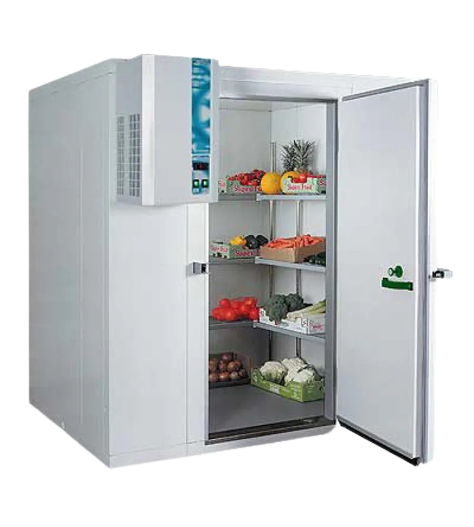
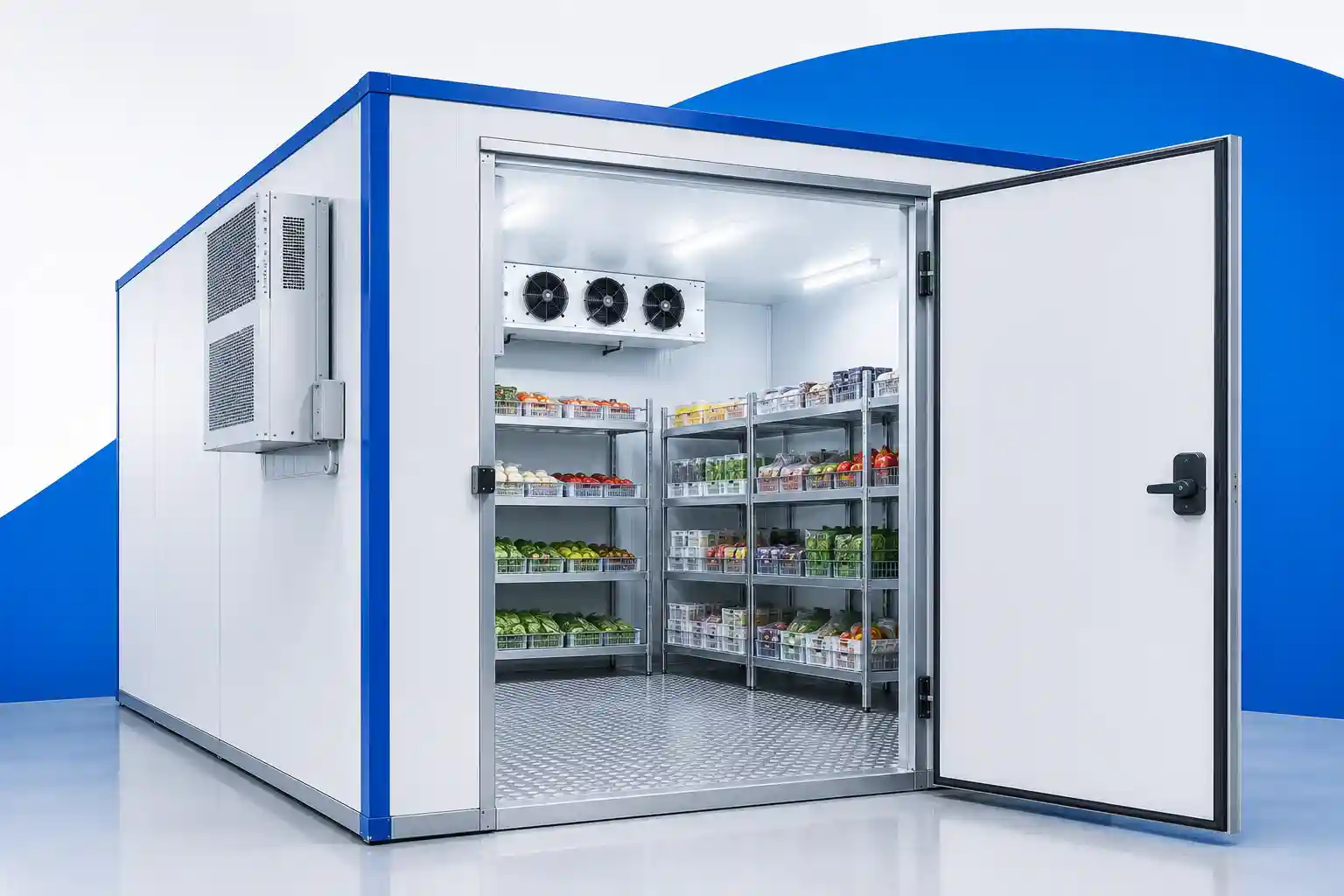
If you run a restaurant, supermarket, or pharmacy anywhere in the UAE, sooner or later you’ll need a walk-in chiller — a large insulated room built to hold fresh stock at a safe temperature, usually somewhere between 0°C and 8°C. Some people call it a walk-in cooler, others just say “chiller room.” It’s the same equipment either way. Coldroom.ae builds these across the UAE — Dubai, Abu Dhabi, Sharjah, Ajman, wherever you’re operating.
A freezer works on completely different terms. It runs below -18°C and holds food for the long haul. A chiller just needs to keep things cold enough that nothing spoils, without turning your meat, dairy, or produce into a block of ice.
We manufacture and supply, so you’re not stuck choosing between an off-the-shelf box and a custom build. We do both, built around what you actually need. Sometimes that’s a small unit that fits into a tight café kitchen. Other times it’s a full industrial room for a distribution centre.

Why Your Business Needs a Walk-In Chiller
Dubai Municipality and ADAFSA both set hard temperature limits for chilled food, and inspectors actually check for them. Leave stock above 5°C too long and it drifts into what’s known as the Danger Zone, roughly 5°C to 60°C, where bacteria multiply fast. Cross that line and you’re not looking at a warning. You’re looking at a failed inspection, a fine, or stock you have to throw out entirely.
Pharmacies and clinics have even less room for error — medication that sits outside its range can lose potency, or stop being safe to give patients at all. That’s why every chiller we spec is built to hold its temperature reliably. It’s the baseline everything else — your compliance, your stock, your inspections — depends on.
Industries We Serve
Restaurants, hotels, and central kitchens are probably our biggest customer base. Kitchens go through produce, dairy, and prepped ingredients fast, and the door gets opened constantly during service — the chiller has to keep up with that traffic without losing its temperature.
Supermarkets are a different challenge. Most run a shared compressor system feeding several chillers and display cabinets at once, so if one part of that system fails, you can lose stock across the whole cold chain, not just one room.
Meat, poultry, and seafood processors have tighter tolerances — usually 0°C to 2°C — and need interiors that can handle daily washdowns.
Pharmacies and healthcare facilities store temperature-sensitive medical supplies in the 2°C to 8°C range, often with digital monitoring to satisfy compliance requirements.
Florists and retail flower suppliers use a specialised version of the chiller with gentler airflow and higher humidity, so delicate stock doesn’t dry out.
Walk-In Chiller Types We Build
Buyers often assume one chiller is basically like another. It isn’t, and picking the wrong type for your operation tends to cost you later. Here’s what we build, and who each one actually suits:
Commercial walk-in chiller. This is the one most restaurants, cafés, and food retailers end up with. Panels run 75mm to 100mm, temperatures sit anywhere from 0°C to 8°C, and the whole thing is sized to fit into whatever awkward back-of-house space you’ve actually got.
Industrial walk-in chiller. For food processors, distribution centres, and large retail operations moving serious volume. These lean on heavier compressors (Tecumseh shows up a lot), ceiling or floor-mounted evaporators, and usually a pressure relief valve to handle the swings that come with constant cooling cycles.
Outdoor walk-in chiller — Designed to sit outside the building envelope, with sloped or rain-capped roofing, sealed flashing, and rust-resistant exterior panels to survive direct sun and seasonal rain. Needs a reinforced or insulated concrete slab base so ground heat doesn’t add strain to the refrigeration motor.
Restaurant walk-in chiller. Basically a commercial unit shelved for how a kitchen actually works. It runs 0°C to 4°C, raw meat goes on the bottom shelves, ready-to-eat items go up top, and that separation isn’t optional if you want to avoid cross-contamination.
Prefabricated walk-in chiller. Factory-built panels that lock together on site with a cam system. Quicker to put up than a custom job, and if you ever need to expand it or move it later, that’s a lot easier too.
Customised walk-in chiller. Built around whatever your site actually demands — odd dimensions, flooring rated for heavy cart traffic, or shelving laid out around your specific product mix.
Not sure which type fits your operation? Get in touch and we’ll recommend the right setup based on your space, product, and throughput.
Walk-In Chiller Technical Specifications
Every unit we build is specified around your temperature, capacity, and site requirements. Here’s what typically goes into a walk-in chiller:
| Component | Attribute | Typical Value |
| Insulation panel | Material | Polyurethane (PUR) or PIR foam core |
| Insulation panel | Thickness (chiller) | 75mm – 100mm (compact prefab units sometimes 60mm) |
| Insulation panel | Facing | Pre-painted galvanized steel (PPGI) or 304-grade stainless steel |
| Insulation panel | Foam density (standard build) | Approx. 40–44 kg/m³ |
| Insulation panel | Foam density (custom build) | Approx. 36–42 kg/m³ — confirmed per project spec |
| Panel joints | Locking system | Cam-lock mechanism |
| Refrigeration | Compressor brands | Bitzer, Copeland, Danfoss, GEA Bock, Tecumseh |
| Refrigeration | Evaporator | Ceiling or wall-mounted unit cooler (e.g. LUVE) |
| Refrigeration | Rating requirement | T3 tropicalized (rated for 50°C ambient) |
| Flooring | Standard chiller | Reinforced insulated panel floor, or floorless on sealed concrete slab |
| Flooring | Heavy-traffic option | Anti-slip aluminium checker plate or stainless steel |
| Controls | Monitoring | Digital microprocessor thermostat, optional data logger |
| Safety | Pressure management | Compensation/pressure relief valve (industrial builds); internal emergency release handle (industrial and custom builds) |
Walk-In Chiller vs. Walk-In Freezer
| Walk-In Chiller | Walk-In Freezer | |
| Operating temperature | 0°C to 8°C | -18°C or lower |
| Panel thickness | 75mm – 100mm | 100mm – 150mm |
| Typical use | Fresh produce, dairy, beverages, prepped food | Frozen meat, seafood, ice cream, long-term stock |
| Storage duration | Short to medium term | Long term |
| Energy consumption | Lower | Higher — colder set point means more compressor runtime |
Commercial vs. Industrial Walk-In Chillers
| Commercial | Industrial | |
| Typical size | 5m³ – 100m³ | 100m³ and up |
| Refrigeration load | 1–15kW | 15–500kW+ |
| Typical buyer | Restaurants, cafés, pharmacies, small retail | Food processors, distributors, large supermarkets, 3PL operators |
| Door traffic | Frequent, foot traffic | Lower frequency, forklift-compatible openings common |
Engineered for UAE Conditions
Ambient temperatures in the UAE regularly climb past 45°C in summer, and refrigeration equipment built for European or North American conditions simply isn’t rated for that kind of heat load. The UAE market demands T3 tropicalized equipment — oversized condenser coils and high-static fans that keep rejecting heat even when the air around them is already hot. Skip this and the compressor ends up working far harder than it should, which shows up later as higher power bills, elevated head pressure, and a shorter operating life. We factor this into how we spec every project for the region.
Sand and dust are a quieter problem. Condenser coils mounted outdoors or at ground level collect fine desert particulate over time, and once that builds up on the fins, discharge pressure climbs and airflow drops — routine coil cleaning isn’t cosmetic maintenance here, it’s what keeps the compressor from working overtime.
On the construction side, insulated panels used in commercial cold rooms need to satisfy the UAE Fire and Life Safety Code, which governs the combustibility of materials used in building envelopes. Panels are engineered to meet the relevant fire testing and Civil Defence approval requirements for the specific project and jurisdiction — exact certification details are confirmed at the site assessment stage, since requirements can vary by emirate and application. Floor-to-wall joints are also built coved rather than square, per Dubai Municipality food safety guidance, to remove the corners where dirt and bacteria tend to collect.
Our Walk-In Chiller Installation Process
Installation generally follows the same broad stages, though the exact sequence and timeline depend on your site.
The site needs a clean, flat, and level floor — an uneven base throws off panel sealing and door alignment down the line. We leave the necessary clearance between the chiller and surrounding walls for airflow, and square the layout with chalk lines and diagonal measurements before anything is locked into place.
Panel assembly usually runs in a set order: floor panels go down first (with shims if the slab isn’t perfectly level), then walls lock together corner by corner using the cam-lock wrench, with sealant run along every joint to keep the thermal envelope airtight. Ceiling panels go on last, resting on the wall top rails.
Electrical work, refrigerant piping, and startup calibration should always go to licensed contractors — this is the step where a rushed or DIY job tends to show up later as a leak, a seal failure, or a system that never quite holds its set temperature.
Walk-In Chiller Service & Maintenance
Even with regular care, faults happen. Here’s what tends to go wrong, and what fixes it:
| Symptom | Likely Cause | Fix |
| High discharge (head) pressure | Fouled condenser coils, failed fan motor, or refrigerant overcharge | Clean coils chemically, replace fan motor, or have excess refrigerant safely reclaimed |
| Ice building up on the evaporator | Defrost heater or timer failure, frequent door openings without strip curtains, or a faulty expansion valve | Test/replace defrost components, install strip curtains, adjust the valve |
| Compressor tripping on thermal overload | Extreme ambient heat on a non-tropicalized unit, or low incoming voltage | Confirm the unit is T3-rated, check electrical supply stability |
| Water pooling on the floor | Blocked condensate drain line | Clear the line, check the drain trap |
| Door seal failing / warm air leaking in | Cracked or worn gasket | Inspect and replace gaskets on a regular schedule |
A short list of habits keeps most of these from happening in the first place: clean condenser coils on a quarterly schedule, check door gaskets regularly for cracks or loss of magnetic seal, and don’t let condensate drains go unchecked for months at a time. If a fault does come up, get in touch and we’ll help you diagnose it.
Frequently Asked Questions
0°C to 5°C is the safe range for food compliance. You can push general storage up to 8°C if nothing in there is high-risk. Individual products can need something tighter though — poultry and red meat prefer the colder end around 0-2°C, seafood even more so at -1 to 1°C, while dairy has a bit more breathing room at 2-4°C.
Nothing functionally — the two terms describe the same equipment. “Walk-in cooler” is more common in some regional markets, but both refer to a positive-temperature, walk-in-sized refrigerated room.
Depends entirely on size. Small modular units sit around AED 11,000 to 25,000, and once you’re into a medium commercial install for a hotel or supermarket that jumps to AED 25,000-45,000 or more. Industrial pricing works differently — compact industrial-grade units start near AED 25,900, but a full-scale industrial room only gets priced once we know your actual capacity requirements. Outdoor and skid-mounted setups are the widest range of all, anywhere from AED 11,000 up to 45,000+, mostly because “outdoor unit” covers everything from a small skid-mounted box to a large custom build. Best way to get a real number is to just send us your dimensions.
Where the ice forms is usually the best clue. Icing concentrated around the door frame points to a worn gasket or missing strip curtain letting warm air in on every opening. Ice spreading across the whole evaporator coil more often means the defrost cycle itself has failed — either the heating element or the timer isn’t clearing frost between cycles. Get in touch and we can help diagnose which one you’re dealing with.
Yes — outdoor placement is common when indoor floor space is tight or a unit needs to sit near a loading dock. The trade-off is more direct exposure to sun and blowing sand, so outdoor units generally need more frequent condenser cleaning than an equivalent indoor unit, and the weatherproofing and base preparation covered above become essential rather than optional.
Size is part of it, but not the whole story. If you’re running one restaurant kitchen or a single retail outlet, you’re almost certainly in commercial territory. Industrial makes sense once you’ve got continuous processing lines running, multiple outlets pulling from one cold room, or you need forklifts moving through the door instead of people. The comparison table further up has the exact numbers if you want to check where you land.
Get a Walk-In Chiller Quote
As a walk-in chiller manufacturer and supplier working across Dubai, Abu Dhabi, Sharjah, Ajman, and the rest of the UAE, we design, build, and install to your exact temperature and capacity requirements — commercial, industrial, or fully customised.