

Vegetable Cold Storage Manufacturers UAE

Vegetables are still alive after they’re picked. They keep breathing, releasing heat and moisture, well after they leave the field — and a standard chiller just isn’t built to keep up with that. That’s the gap Coldroom.ae works in. We design, build, and install vegetable cold storage across Dubai, Abu Dhabi, Sharjah, Ajman, and the rest of the UAE, for wholesalers, hypermarkets, farms, and 3PL operators, with the temperature, humidity, and ethylene control set for whatever crop is actually going in the room.

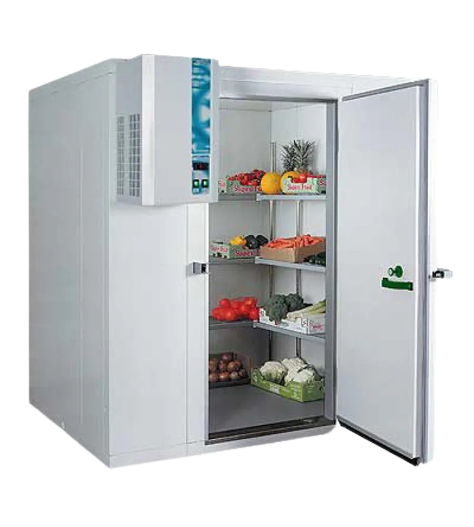
Vegetable cold storage room with refrigerated racks and fresh vegetables for temperature-controlled produce storage.

What Is Vegetable Cold Storage?

Vegetable cold storage is a refrigerated environment built to slow down what’s already happening inside fresh produce after harvest — respiration, moisture loss, ripening. A general-purpose cold room won’t do this properly. Temperature, relative humidity, and airflow all have to be managed together, and if any one is off, it shows fast — wilting, chilling damage, produce that rots before it’s even out on the shelf.

Not every vegetable reacts to cold and moisture the same way, which is why there’s no single setup that covers all of them. Leafy greens need a room that would ruin a batch of tomatoes. Put carrots in a room built for onions and the same thing happens. This is the core design challenge Coldroom.ae solves for every project.

Why Vegetable Cold Storage Is Essential in UAE

Most of the fresh produce in the UAE arrives from somewhere else, and the country is putting real money into fixing that — food security, cold chain infrastructure, agritech. Meanwhile summer ambient temperatures pass 45°C as a matter of course, sometimes hitting 50°C. Put those two facts together and correctly engineered vegetable cold storage stops being a nice-to-have. It’s what keeps the supply chain from breaking.

Poorly designed cold rooms are also a common source of avoidable loss. Blanket temperature settings of “0°C to 15°C for all vegetables,” which is still common advice from some UAE suppliers, ignore the fact that vegetables like tomatoes and cucumbers suffer chilling injury well above 0°C, while leafy greens and broccoli need to sit as close to 0°C as possible. Getting this wrong doesn’t just shorten shelf life — it can wipe out an entire batch.

Ideal Storage Conditions by Vegetable Type

Leafy Greens (lettuce, spinach, kale)
0°C – 2°C | 95–100% humidity | 14–21 days storage life | High ethylene sensitivity
Wilts fast without saturated air; ethylene exposure accelerates yellowing.

Broccoli
0°C | 95–100% humidity | 21–28 days storage life | Extremely high ethylene sensitivity
Sensitive to ethylene at concentrations as low as 0.1 ppm; needs immediate cooling.

Cabbage & Cauliflower
0°C – 4°C | 90–100% humidity | Several weeks with proper humidity and temperature control | Sensitive
Segregate from ethylene-producing fruit; keep near 0°C for best shelf life.

Carrots
0°C | 98–100% humidity | 5–9 months storage life | Moderate ethylene sensitivity
Shrivels and loses crispness below 95% RH.

Cucumbers
10°C – 13°C | 90–95% humidity | 10–14 days storage life | High ethylene sensitivity
Chilling injury (pitting, water-soaking, decay) below 10°C; general guidance sometimes cites a wider 7–13°C range.

Mushrooms
0°C – 2°C | 95% humidity | 5–7 days storage life | Low ethylene sensitivity
Airflow must prevent condensation on the cap or bacterial blotch develops.

Dry Onions
0°C | 65–75% humidity | 6–9 months storage life | Low ethylene sensitivity
Needs low humidity — the opposite of most vegetables; must be stored separately.

Potatoes
4°C – 10°C | 85–90% humidity | 2–10 months storage life | Low ethylene sensitivity
Below 4°C triggers “cold sweetening,” ruining fry quality; requires dark storage.

Tomatoes (ripe)
10°C – 15°C | 85–90% humidity | 7–14 days storage life | High ethylene sensitivity
Below 10°C permanently halts ripening and destroys flavour compounds; some sources cite up to 18°C for optimal flavour.

Asparagus
0°C – 2°C | 95–99% humidity | 14–21 days storage life | Moderate ethylene sensitivity
High respiration rate; toughens quickly if cooling is delayed.
How Vegetable Cold Rooms Work: The Engineering Behind Freshness

Heat of respiration. Vegetables continue converting oxygen into carbon dioxide, water vapour, and heat long after harvest. This “vital heat” is a major, variable part of a cold room’s total cooling load — broccoli respires at roughly ten times the rate of mature potatoes, so a room storing high-respiration crops needs significantly more refrigeration capacity than one holding dormant root vegetables.

Evaporator Delta T and humidity. Most vegetables need 90–95% relative humidity to avoid transpiring and shrinking. The variable that controls this is Delta T — the difference between the refrigerant’s evaporating temperature and the room’s return air temperature. For vegetable cold storage, Delta T needs to stay within a tight 4°C to 5°C band. When contractors install an undersized evaporator paired with an oversized compressor to cut costs, Delta T can widen to 10–12°C. At that point, the evaporator coil acts as an aggressive dehumidifier, stripping moisture from the air and drying out the produce it’s meant to protect.

Airflow. High-velocity air blasted directly onto leafy greens strips away the thin humid layer around each leaf, causing windburn and faster desiccation. Vegetable-specific evaporators use dual-discharge or low-velocity fan configurations instead, spreading cooling evenly without damaging delicate surfaces.

Defrost method. Ice buildup on evaporator coils reduces heat transfer and restricts airflow. Hot gas defrost — which redirects the compressor’s own high-temperature discharge gas back into the evaporator — clears ice quickly from the inside out with minimal temperature spikes, making it the preferred method for commercial vegetable rooms over electric resistance defrost.

Pre-cooling. Freshly harvested produce carries significant field heat and respires at its fastest rate. Loading it directly into a holding cold room overwhelms the refrigeration system and puts already-stored inventory at risk. Forced-air cooling, vacuum cooling, and hydrocooling are used to bring produce down to storage temperature before it enters the cold room. Hydrocooling in particular can cool produce up to fifteen times faster than air cooling, though the wash water needs continuous sanitising with peracetic acid or ozone rather than chlorine alone, since chlorine loses effectiveness once organic soil builds up in the water.

Types of Vegetable Cold Storage Solutions

  • Modular and monoblock cold rooms — plug-in units suited to smaller grocers, farms, and temporary storage needs.
  • Commercial walk-in cold rooms — the standard setup for supermarkets, restaurants, and mid-size distributors.
  • Multi-chamber industrial cold storage warehouses — built for wholesale distributors and importers operating out of logistics hubs like Al Aweer and Jebel Ali Free Zone, with heavy-duty racking and high-turnover loading docks.
  • On-farm pre-cooling and holding rooms — increasingly in demand from the UAE’s growing hydroponics and vertical farming sector, letting growers arrest respiration at the point of harvest.
  • Cold chain transport — refrigerated trucks that maintain the same temperature and humidity conditions between the cold room and the point of sale.

Storage Compatibility: Why Vegetables Can’t All Share One Room

Segregating produce by storage compatibility group is one of the most overlooked factors in commercial cold storage design.

  • Ethylene producers (0°C – 2°C, 90–95% RH): temperate fruits like apples and pears, which continuously release ethylene gas.
  • Ethylene-sensitive vegetables (0°C – 2°C, 95–100% RH): broccoli, leafy greens, cabbage, carrots — exposure to ethylene from Group 1 causes yellowing, bitterness, and premature spoilage.
  • Moisture-sensitive vegetables (0°C – 2°C, 65–75% RH): dry onions and garlic, which sprout and grow mould if stored at the high humidity leafy vegetables need.
  • Chilling-sensitive vegetables (10°C – 15°C, 85–90% RH): tomatoes, cucumbers, eggplants, potatoes — storing these near 0°C causes irreversible chilling injury and cellular breakdown.

Strongly odorous vegetables like onions also need to be physically isolated, since many vegetables are porous enough to absorb ambient odours during storage.

Built for UAE Conditions

Cold room design in the UAE has to account for climate stress that most refrigeration equipment simply isn’t built for elsewhere.

  • Insulation: Standard 50mm PUF panels used in temperate climates fall well short of what’s needed here. Chilled vegetable storage calls for a minimum of 80mm to 100mm PIR insulated panels, which combine better thermal resistance with the fire-retardant properties required under UAE Civil Defence regulations and Dubai’s Al Sa’fat Green Building framework.
  • Compressors and condensers: At 50°C ambient temperatures, standard commercial compressors lose a large share of their rated cooling capacity and are at real risk of high-head-pressure failure. Vegetable cold rooms need compressors selected specifically for high-ambient, tropicalised duty, paired with condensers oversized by 20–30% and fitted with anti-corrosion coatings and wider fin spacing to resist sand and coastal salinity.
  • Doors and infiltration: The temperature difference between UAE summer air and a 0°C vegetable room can exceed 45°C at the doorway. High-speed rapid roll doors interlocked with heated air curtains are essential to stop that heat and moisture flooding in every time a door opens.
  • Floor insulation: Skipping floor insulation to save on upfront cost is common, but the ground beneath a UAE cold room stays hot year-round. Without 50–75mm of insulation under the slab, compressors end up running continuously just to offset heat transfer from below.

Industries We Serve Across the UAE

  • Wholesale distributors and importers at logistics hubs such as Al Aweer Fruit and Vegetable Market and Jebel Ali Free Zone, requiring multi-chamber modular warehouses.
  • Hypermarkets, supermarkets, and e-grocery dark stores, which need compact, precisely zoned rooms to serve as urban fulfilment hubs.
  • Agritech, hydroponics, and vertical farming operations, which increasingly need on-site pre-cooling and holding capacity.
  • HORECA and central kitchens, which need compartmentalised chillers to keep ethylene-producing and ethylene-sensitive items apart within a small footprint.

As a vegetable cold room manufacturer and supplier working across Dubai, Abu Dhabi, Sharjah, and Ajman, Coldroom.ae designs both standalone units and larger industrial cold storage facilities to match each of these use cases.

Common Storage Problems and Engineered Solutions

ProblemRoot CauseEngineered Fix
Vegetables dehydrating, shrivelling, or wiltingEvaporator Delta T too wide (10°C+), acting as a dehumidifier; excess fan velocityResize evaporator for a 4–5°C Delta T; add adiabatic ultrasonic humidification; reduce fan speed
Broccoli or leafy greens yellowing prematurelyExposure to ethylene from mixed storage with fruit or other producersSegregate by compatibility group; install ROS or TiO₂ catalytic ethylene control where segregation isn’t possible
Tomatoes pitting, potatoes turning unexpectedly sweetChilling injury from storage below the crop’s physiological minimumSet temperature controllers to crop-specific thresholds; use compartmentalised zoning for mixed inventory
Condensation, ice buildup, and heat gainInfiltration through poorly managed doorsInstall rapid roll doors with heated air curtains; upgrade to hot gas defrost
High energy bills, early compressor failureUndersized condenser or insulation for 50°C UAE summersUse 100mm+ PIR panels, oversized anti-corrosion condensers, tropicalised compressors
Mould growth or bacterial blotchRelative humidity above 95% in stagnant air, allowing condensation on produceMaintain continuous low-velocity airflow; use perforated crates instead of tight stacking

Frequently Asked Questions

Can I store all vegetables together in one cold room?

It depends on which crops you’re mixing. If you’re only handling one compatibility group — for example leafy greens and carrots, which share similar temperature and humidity needs — a single room can work fine. Problems start when a facility tries to combine chilling-sensitive crops like tomatoes with near-freezing crops like broccoli, or stores dry onions alongside high-humidity greens. For mixed inventory spanning several groups, a multi-chamber room with independently controlled zones is usually more practical than trying to compromise on a single set temperature and humidity for everything.

What’s the difference between potato and onion cold storage?

Potatoes need warmer, more humid conditions — 4°C to 10°C at 85–90% RH, kept dark to prevent greening and “cold sweetening.” Dry onions need the opposite: a colder, much drier environment at around 0°C and just 65–75% relative humidity. Storing onions in a typical high-humidity vegetable room breaks their dormancy and causes rooting and fungal decay, so the two crops shouldn’t share a room.

What is mushroom cold storage temperature?

Mushrooms need 0°C to 2°C at around 95% relative humidity. Airflow needs to be managed carefully — condensation forming on the cap surface leads to bacterial blotch, even at the correct temperature.

What temperature is used for tomato cold storage?

Ripe tomatoes hold well between 10°C and 15°C at 85–90% RH. Mature green tomatoes need slightly warmer conditions, generally 13°C to 21°C. Tomatoes are highly sensitive to chilling injury, so temperatures below 10°C should be avoided entirely.

What’s the ideal broccoli cold storage temperature?

Broccoli needs to be cooled to 0°C almost immediately after harvest and held at 95–100% relative humidity. It’s also extremely ethylene-sensitive — even trace ethylene exposure can trigger rapid yellowing and spoilage.

Do I need a humidifier in a vegetable cold room?

For most commercial and high-turnover applications, yes. Frequent door openings dilute internal humidity faster than the refrigeration system alone can replace it. Adiabatic humidification — ultrasonic or dry fog systems — is preferred over steam, since it doesn’t add heat load back into the room.

What are the food safety requirements for cold storage in the UAE?

Two codes govern this: the Dubai Municipality Food Code, or ADAFSA’s Code of Practice No. 13 if you’re in Abu Dhabi. Both cap chilled high-risk foods at 5°C. In practice, that means digital temperature logs running continuously, sensors that are actually calibrated, and hygiene protocols solid enough to hold up under HACCP certification.

How much does a vegetable cold room cost in the UAE?

There’s no fixed answer — size, insulation thickness, and refrigeration capacity all move the number, so treat any figure you see as a starting point, not a quote. Small modular cold rooms tend to start around AED 11,000. Beyond that, larger commercial and industrial facilities get priced individually, based on capacity, location, and what the site actually needs.

Get a Custom Vegetable Cold Storage Solution

Whether you’re setting up a compact cold room for a single vegetable line or a multi-chamber industrial facility for a distribution hub, Coldroom.ae’s engineers can design a system matched to your crop mix, throughput, and UAE site conditions — across Dubai, Abu Dhabi, Sharjah, Ajman, and beyond.