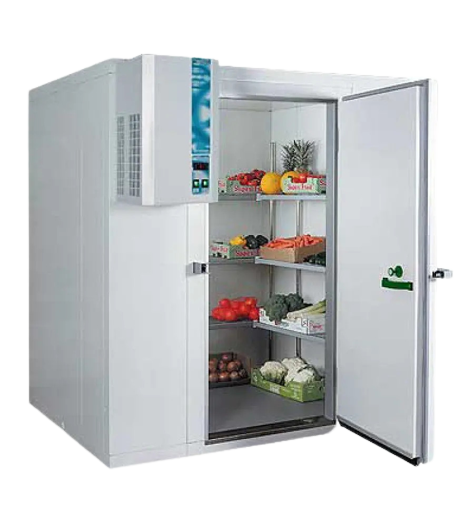
Temperature is the easy part, since a food cold room can reach +2°C to +8°C too. What defines a medicine cold room is the system around that temperature:
• Standby refrigeration: a second unit takes over if the first one fails or goes into defrost.


A medicine cold room is a walk-in room held at a validated temperature, usually +2°C to +8°C, where vaccines, biologics, blood products and other medicines are stored with backup cooling and continuous temperature records. For a hospital, pharmacy or distributor, it protects the value of the stock and is one of the areas an inspector will look at. Coldroom.ae is a manufacturer and supplier of industrial and commercial medicine cold rooms in Dubai, Abu Dhabi, Sharjah, Ajman and across the UAE.
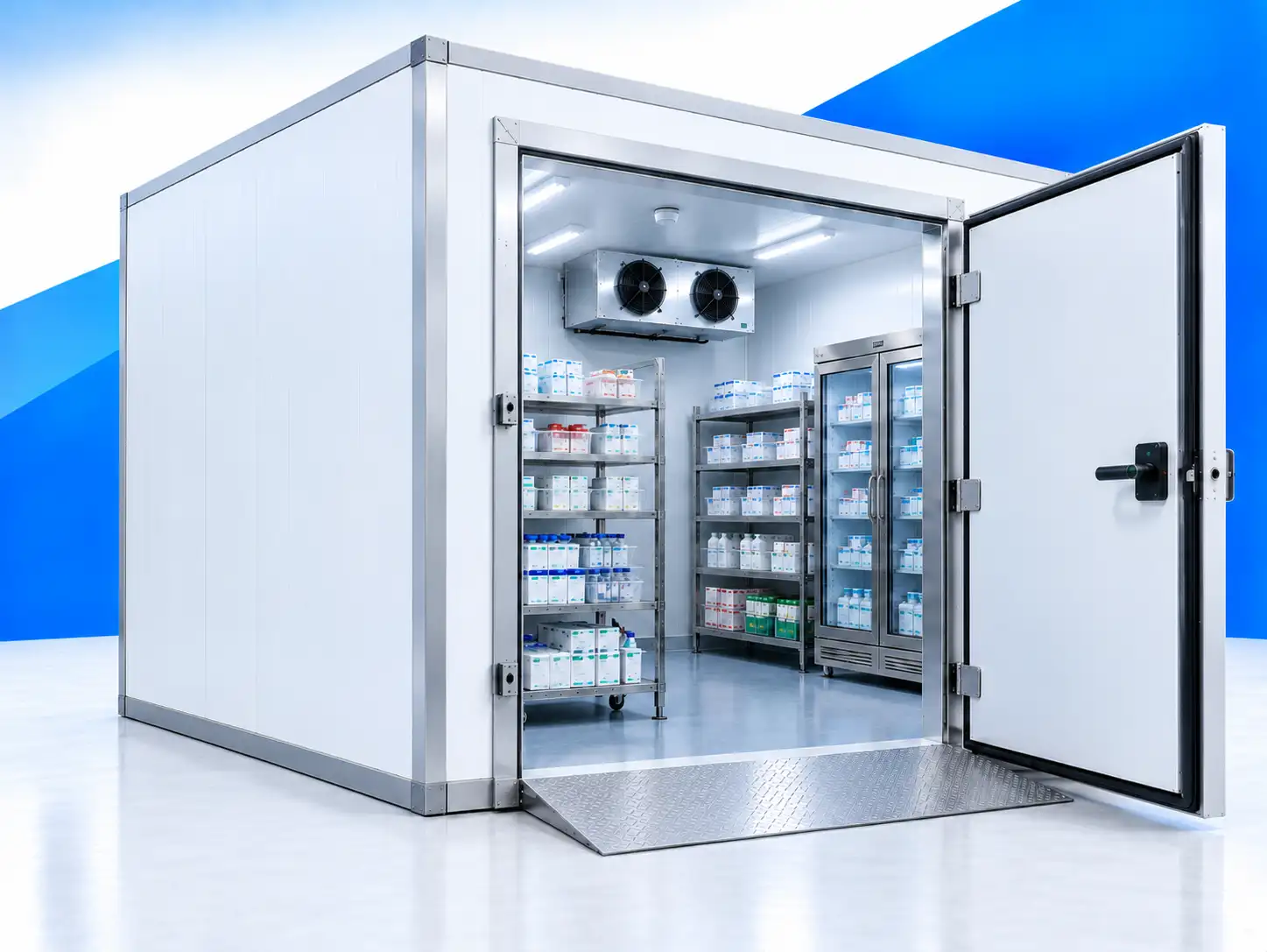
Temperature is the easy part, since a food cold room can reach +2°C to +8°C too. What defines a medicine cold room is the system around that temperature:
• Standby refrigeration: a second unit takes over if the first one fails or goes into defrost.
• Controlled airflow: cold air from the evaporator is kept away from stored vials.
• Suitable humidity and lighting: both are matched to the stock.
• Readable records: logged temperature data that an inspector can follow.
The temperature also has to hold evenly from corner to corner, loaded or empty. Small modular rooms suit clinic and pharmacy-scale stock, while larger custom rooms with pallet racking suit warehouses.
• The damage cannot be reversed. Heat exposure adds up over time, and a single freeze can ruin liquid vaccines that contain aluminium adjuvants.
• The damage is hard to see. A frozen vial can look perfectly normal, so the temperature log is the only reliable evidence of how stock was kept. An unlogged excursion can mean writing off the batch.
• Medical warehouses face an extra check. Licensing in the UAE includes inspection of the built premises, so the cold room should be specified before the licensing stage.
• Supply chain: pharmaceutical importers, wholesalers, re-export warehouses, and 3PL and cold-chain logistics providers.
• Healthcare providers: hospitals, central pharmacies, oncology compounding units, vaccination centres and occupational health clinics.
• Blood and diagnostics: blood banks, transfusion services and diagnostic laboratories.
• Retail and manufacturing: pharmacy chains, and biopharmaceutical and generic drug manufacturers.
| Room type | Temperature | Typical contents | Note |
| Medicine cold room | +2°C to +8°C | Biologics, insulin, routine vaccines, injectables | The most common configuration |
| Cool storage room | +8°C to +15°C | Heat-sensitive tablets and topicals | UAE label: “not to exceed 15°C” |
| Blood cold storage room | +1°C to +6°C | Red blood cells | Platelets follow a different range (see FAQ) |
| Combi cold room | Two zones | Chilled plus frozen or ambient | See our combi cold room guide |
Modular and container-based builds are also available. The manufacturer’s label always takes priority over these general ranges.
Vaccine cold storage depends on the formulation. The cold chain temperature for vaccines varies, and so does the room design: freeze, heat and light sensitivity each ask something different of the room.
| Vaccine group | Storage temperature | Freeze sensitivity | Heat and light note |
| DTaP, Td, Hepatitis A/B, PCV | +2°C to +8°C | High | Keep in the original carton |
| Hib, hexavalent (e.g. Infanrix-hexa) | +2°C to +8°C | High | Light-sensitive |
| IPV | +2°C to +8°C | High | Heat- and light-sensitive |
| HPV | +2°C to +8°C | High | Light-sensitive; keep in the original carton |
| Influenza, rotavirus | +2°C to +8°C | High | Heat-sensitive |
| MMR (freeze-dried) | -50°C to -15°C, or +2°C to +8°C | Low before mixing | Heat- and light-sensitive once mixed |
| Varicella, MMRV | -50°C to -15°C | Must stay frozen | Do not refreeze after thawing |
| Oral polio (OPV) | -25°C to -15°C (WHO PQS freezer room) | Stored frozen | Check the vaccine vial monitor |
| Certain mRNA vaccines (e.g. original Pfizer-BioNTech vial) | -90°C to -60°C | Ultra-cold | Needs ultra-low freezers, not walk-in rooms |
Ranges follow CDC, WHO and DHA immunisation guidance. Always confirm against the package insert.
The medicine cold room is a main holding point in a vaccine cold chain, sitting between the manufacturer and the clinic. Freezer rooms produce the ice packs, pharmacy fridges hold clinic-level stock, and cold boxes carry vaccines to outreach sites. Four habits matter most inside the room:
• Use the earliest-expiry stock first.
• Keep about one-third of the room volume free so air can circulate.
• Pre-cool diluents stored at room temperature, and never freeze them.
• Hold expired or recalled stock in a separate, marked area.
Refrigeration, panel and condensing unit details are on our pharmaceutical cold room page. The features below are specific to medicine and vaccine rooms.
| Attribute | Specification | Why it matters |
| Setpoint and accuracy | Setpoint around +5°C, controller accuracy ±0.5°C, whole room kept within +2°C to +8°C | Margin against both heat and freezing |
| Airflow protection | Evaporator plume guard | Keeps sub-zero air off vials on upper shelves |
| Humidity | Often held at or below 60% RH for humidity-sensitive products | Protects cartons, labels and dry stock |
| Lighting | Sealed LED, minimum 150 lux on the lowest shelves, no fluorescent tubes | Protects light-sensitive vaccines |
| Shelving | Washable slatted shelves, lowest shelf at least 200 mm above the floor | Allows cleaning and air return |
| Passive holdover | WHO PQS requires an empty vaccine cold room to stay within +2°C to +10°C for at least 8 hours at its maximum rated ambient | Buys time for the generator to start |
| Temperature probes | Glycol-buffered data logger probes | Reads product temperature, not brief door-opening spikes |
Several of these figures come from WHO PQS specifications for vaccine cold rooms. They are a recognised benchmark rather than a UAE-wide legal requirement for every medicine store.
| Feature | Medicine cold room | Pharmacy fridge | Food cold room |
| Capacity | Walk-in, shelf or pallet | Compact, reach-in | Walk-in |
| Standby refrigeration | Yes, 100% | Not typical | Usually not |
| Plume guard and non-UV lighting | Yes, in vaccine rooms | Varies by unit | Not typical |
| Humidity control | Yes | Basic | Often high, for produce |
| Audit documentation | Mapping and validation | Calibrated logger | Food safety logs |
| Role in licensed storage | Built to support it | Small stock only | Not designed for it |
• Dubai: Pharmacies and health facilities are regulated by the DHA, except those in Dubai Healthcare City. Many importers and re-export warehouses operate in free zones such as JAFZA and Dubai South.
• Abu Dhabi: The DoH regulates healthcare facilities and expects vaccine cold chain failures to be reported.
• Sharjah and Ajman: We supply and install industrial and commercial medicine cold rooms in both emirates.
• Across the UAE: Design for summer ambient above 45°C and high coastal humidity. Where seasons affect performance, thermal mapping in summer and winter is good practice. Insulated panels should also hold valid Civil Defence fire approvals.
The Emirates Drug Establishment (EDE) licenses medical warehouses alongside MOHAP. We can supply data loggers and dehumidifiers as part of the room.
It is a walk-in room that stores medicines, vaccines and biologics at a controlled temperature, usually +2°C to +8°C. Unlike ordinary cold storage, it adds standby refrigeration, controlled airflow, humidity and lighting suited to the stock, and monitored temperature records.
Most refrigerated medicines need +2°C to +8°C across the whole room. Some products need cool or frozen storage. Where the label and a general guideline differ, follow the label.
It depends on the vaccine. Routine vaccines such as DTaP, hepatitis B and HPV are kept at +2°C to +8°C, while varicella, MMRV and oral polio vaccines are stored frozen. Liquid vaccines must never freeze.
Not for licensed stock. A food room can match the temperature but usually lacks a backup compressor, plume guard, non-UV lighting and validation records, so it would not normally meet pharmaceutical audit requirements.
Red blood cells are held at +1°C to +6°C and plasma is kept frozen. Standard platelets are the exception, stored at +20°C to +24°C with agitation. Under AABB standards, cold-stored platelets at +1°C to +6°C are used in some cases.
Air leaving the evaporator can briefly drop below 0°C, enough to freeze vials on nearby shelves, so a plume guard redirects it. Sealed LED lighting replaces fluorescent tubes, which can degrade light-sensitive vaccines.
Yes. As a medicine cold room manufacturer and supplier, we design and install rooms in Dubai, Abu Dhabi, Sharjah, Ajman and the rest of the UAE.
Tell us what you are storing, how much, and where. Our engineers will assess the site and recommend a medicine cold room built for UAE conditions, whether it is a new facility, a licensing inspection or an upgrade.

We offer the best quality and energy-efficient cold storage solutions, such as freezer and chiller rooms, Container Cold Rooms, humidifiers, Data Loggers and more, to meet all your refrigeration needs.